2 min read
MUN™ OS gets ready for real hardware
Two changes on MUN™ OS's development branch prepare its first start on a real board. The system waits for its display, can hold 1080p at an exact 60 Hz and builds images to write to a board's storage.
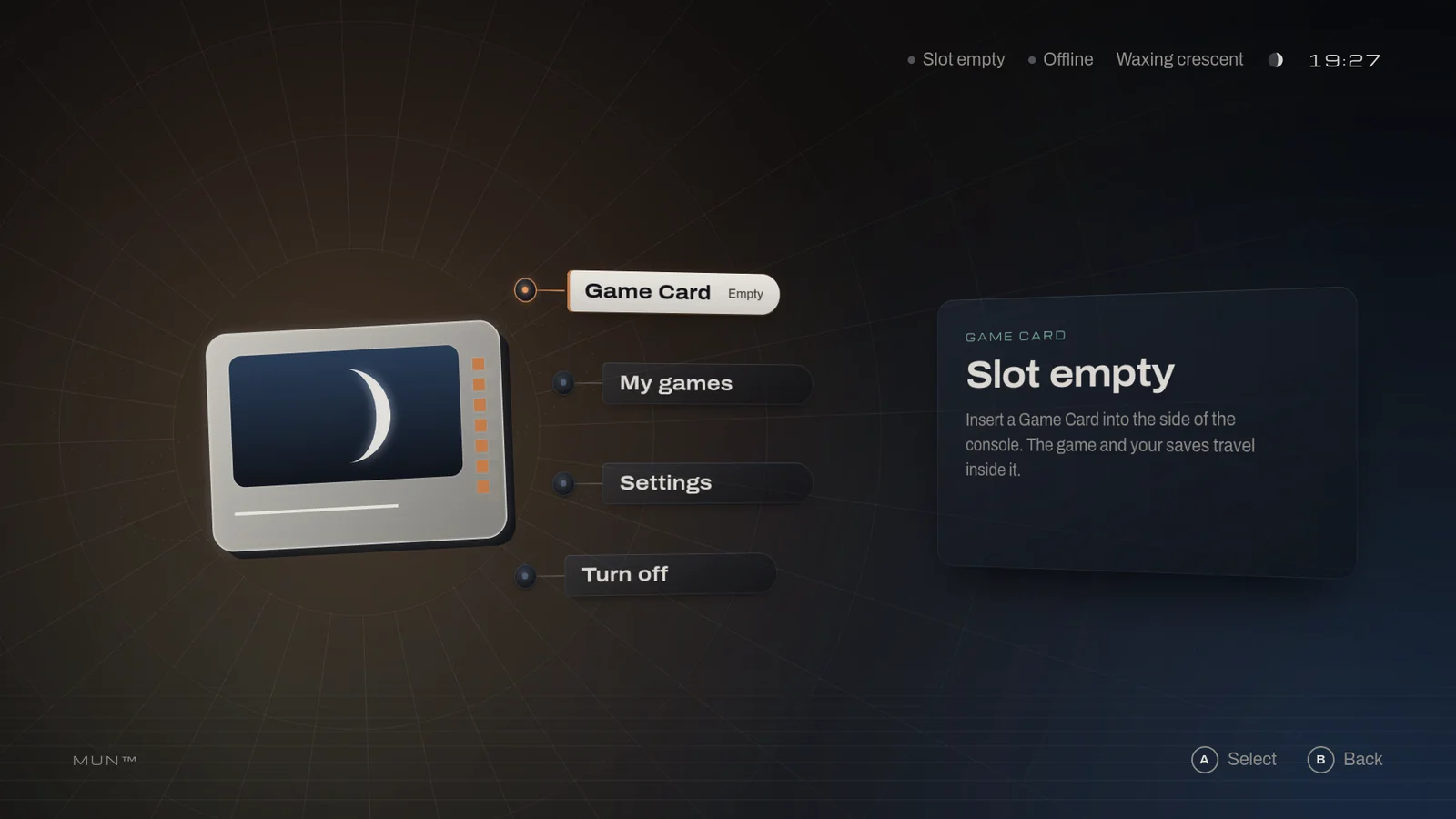
Two changes have landed on the development branch of MUN™ OS. They are not in a preview yet; they will come with the next one. Both prepare the same step: MUN OS's first start on a real board.
The system waits for its display. In the virtual console the display is ready when the interface starts, but on a board its driver can take a few seconds longer. MUN OS now waits for it, instead of leaving the screen black, and starts the interface as soon as the display is there. If there is none it can use, the system journal says what it found and why, and the console keeps trying.
1080p at 60 Hz, for real. A board's image can ask for the interface to start at 1920 × 1080 and 60 Hz, with the exact timing the TV announces: 60 Hz or, failing that, 59.94, the television variant. The journal records the mode the display ended up using. The virtual console works as before, and the resolution you pick in Settings still has the last word.
Images for a board. Besides the image the virtual console runs, one can now be built to write to a board's storage, such as a microSD card. A board that needs its maker's kernel can say so, with its checksum, its licence and its source code, and the image keeps a record of all of it.
What comes next. The first start on real hardware, on ARM development boards. They are not MUN's hardware, which does not exist yet. The goal is modest on purpose: that it powers on, starts and shows the home screen over HDMI at 1080p, and going through every section of Settings with a keyboard. Games, sound and graphics acceleration on a board will come later.
Where it was checked. In the virtual console, on a Mac with Apple Silicon, among other tests:
- the display's driver arriving at 8 seconds, at 50, and never;
- five virtual displays with different modes;
- a game and back.
The board image was built, but it has not started on any board yet. The automated checks pass on macOS and Linux. On a real board, nothing yet: that is the next step, and we will tell you how it goes.